



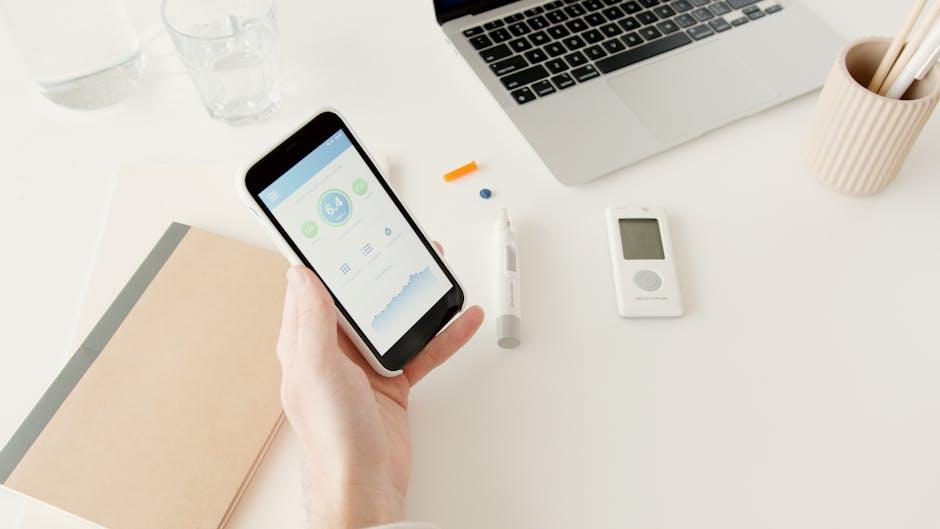
The nurse hands you a blood pressure cuff that pairs with your phone, mentions the readings go “straight to the team,” and moves on to the next room. At home you take your first reading, watch it upload, and wonder who, exactly, just received it.
What remote patient monitoring is
Remote patient monitoring (RPM) is a clinical arrangement rather than a gadget category: devices at home — blood pressure cuffs, glucose meters, weight scales, sometimes wearables — send readings to a care team between appointments. Typical programs cover hypertension, diabetes, heart failure, and recovery after surgery. The point was never the hardware. It’s the distance between “something changed” and “someone qualified noticed.”
That distance used to be measured in months. A blood pressure trend that would have surfaced at your next checkup now, in principle, surfaces the same week. In principle is doing real work in that sentence, and the sections below are about what holds it up in practice.
Programs differ more than the marketing suggests. Some review incoming data daily and call you when a threshold is crossed; some check in weekly; some mostly ship equipment. Who is actually reading your numbers — usually a nurse or pharmacist, sometimes an algorithm first — matters more than the brand of cuff.
A typical week looks unremarkable. You take your reading, the device sends it, and most days nothing happens at all — which is the system working. When a number crosses your threshold, someone on the team is supposed to notice and call. Over months, those quiet loops can catch a trend that a yearly visit would have missed.
What the evidence says
The findings are encouraging but uneven, which is the honest summary of most health technology. Program evaluations and some trials suggest RPM can lower hospital readmissions for people with heart failure and improve blood pressure control when both patients and clinicians genuinely engage with the data. Results vary widely between programs, and drop-out is common — a monitor in a drawer helps no one.
One pattern shows up repeatedly: the technology works about as well as the humans around it. Programs where nurses or pharmacists review the data and follow up tend to report better outcomes than programs that mostly deliver boxes. The device is the easy part.
Where it falls short
Home devices mis-measure. Cuff position, weak connectivity, and dying batteries all produce numbers that look like trends but are really noise, which is why clinicians watch patterns rather than single readings. Consumer wearables add their own quirks and are generally less accurate than the clinical versions of the same measurement.
The receiving end has limits too. Care teams can drown in dashboards — alert fatigue is a documented problem in remote monitoring, and a flagged reading nobody sees is worse than one never taken. Coverage is complicated as well: Medicare pays for certain RPM programs under specific conditions, private plans vary, and programs sometimes end while the device keeps working, so ask what gets billed and for how long before the box arrives.
Access isn’t even, either. Remote monitoring assumes a smartphone, a steady connection, and the patience to troubleshoot a Bluetooth pairing, which leaves out a meaningful share of the older and rural patients who would benefit most. Programs that ship tablets, use cellular-connected cuffs, or call instead of app-messaging tend to reach more of the people this technology was supposed to help.
Privacy deserves one plain sentence. Data from a clinical RPM program is generally protected health information, but consumer wellness apps are often not covered the same way. Read what you’re agreeing to.
If you’re offered a program, what actually helps
Most of a program’s value is decided in the first two phone calls, before any device ships. The questions below are how you find out which kind of program you’ve been offered.
- Ask who reviews your data, how quickly, and what happens when a reading looks bad. A program without an answer is a device, not a service.
- Confirm coverage first. Ask your insurer or the practice what’s billed, for how many months, and what happens when the program ends.
- Turn off the gamified notifications. Keep the alerts tied to your condition; remove the badges and streaks. A health tool should not borrow habits from a mobile game.
- Check weekly, not hourly. Trends carry the information. Single readings mostly carry anxiety.
- Bring the pattern, not the log, to appointments. Ask which thresholds matter for you specifically — the numbers that should trigger a call are different for everyone.
What doesn’t work
Buying consumer gadgets without a clinical question doesn’t work. A smart scale without a care team and a reason is a scale that texts you.
Assuming more data means better care doesn’t survive contact with real programs. Unreviewed data is just storage with a battery life.
And replacing in-person care doesn’t work. RPM is an addition to a care relationship — a useful one, in decent programs — but a cuff has never examined anyone.
When it’s bigger than the app
Some things bypass the device entirely. Chest pain, sudden shortness of breath, a reading far outside the range your clinician gave you, or sudden weight gain over a couple of days if you have heart failure — these go to your care team or emergency services, not to the app’s message box. No home device should sit between you and that phone call.
If you’ve been enrolled in a program that never contacts you about your data, call the practice and ask who is responsible for reviewing it. That isn’t nagging; it’s the entire premise of the service. A good program behaves like a smoke detector — quiet when nothing’s wrong, immediate when something is — and the fire department, in this arrangement, is your care team.
Remote monitoring is a good idea with a mixed report card: genuinely useful for people whose conditions change quietly, overhyped for everyone else. If you’re offered it, ask the boring questions — who reads this, who pays for it, what happens when a number looks bad. The answers separate medicine from merchandise.